
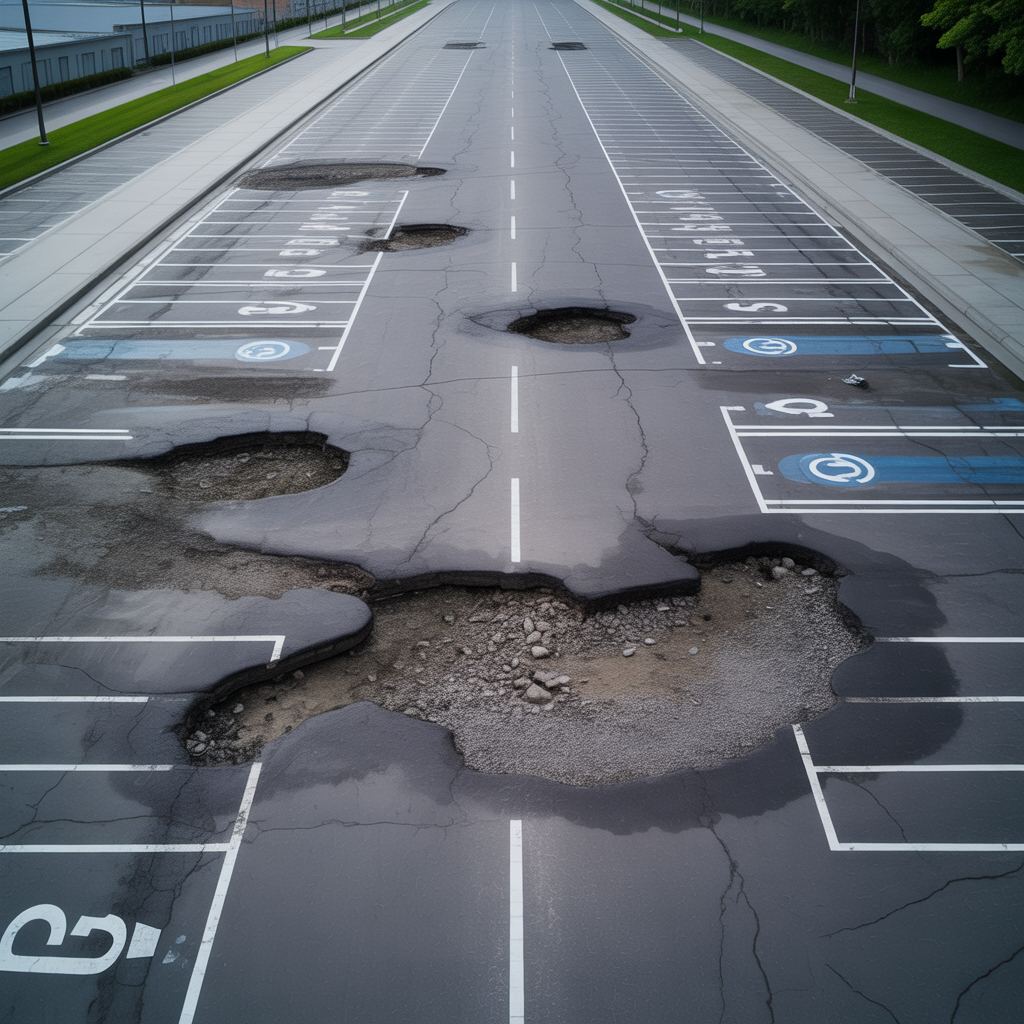
Deferring work does not create the same result on every property. A stable cosmetic issue may remain manageable, while an open crack, drainage problem, loose edge, or moving area can allow the repair scope to grow. The useful question is not whether every defect must be fixed immediately. It is which conditions are likely to change, what operations they affect, and what should be monitored or scheduled.
Separate condition from urgency
A pavement plan should distinguish appearance, routine maintenance, functional concerns, and structural movement. Faded markings may affect circulation or compliance even when the asphalt is stable. A small isolated defect may be repairable. Widespread movement or ongoing water intrusion may deserve earlier investigation because the supporting materials can continue to change.
This ranking helps owners spend deliberately instead of treating every visible issue as equally urgent.
How a scope can grow
- Water enters open cracks and affects supporting material.
- A small broken edge expands under turning traffic or snow equipment.
- Settlement changes drainage and creates a larger low area.
- Repeated temporary patches make the final repair limits less efficient.
- Work that could have been localized becomes tied to a broader resurfacing phase.
- Access or safety concerns require temporary measures while permanent work is planned.
What may reasonably be monitored
Not every imperfection requires immediate construction. Stable hairline cracking, minor surface wear, or isolated cosmetic differences may be documented and reviewed over time. Mark locations, take dated photographs, note changes after winter, and watch whether water, movement, loose material, or trip edges develop. A condition assessment can establish that baseline.
Build a phased pavement plan
- Address active safety, access, and drainage concerns.
- Repair unstable areas that should not remain beneath future resurfacing.
- Group work by location so mobilization and closures are practical.
- Coordinate paving with utility, curb, drainage, or site-improvement plans.
- Schedule lower-priority surfaces according to observed condition and available budget.
- Revisit the plan after winter or major changes in property use.
Seeing this on your property?
Avello walks the lot, scores the pavement, and gives you written findings — free, no obligation.
Compare budget options clearly
Ask for a recommended base scope plus clearly defined alternates. This makes it easier to understand what is essential, what improves long-term performance, and what can be scheduled separately. Proposals should explain quantities, preparation, depths, materials, drainage, traffic control, and restoration rather than relying on a single bottom-line number.
Consider the cost to operations
The construction price is only part of planning. Closures, delivery changes, resident notices, temporary parking, pedestrian routes, and seasonal timing can affect the property. Good phasing can reduce those effects and may be worth comparing alongside direct cost.
Get a clear priority list
Avello can review the site with you and divide the work into practical priorities. You can discuss what needs attention, what can be watched, and how to prepare a written scope that fits the property and its budget process.
2026 Commercial Pavement Budget Planner
A contractor-built worksheet for budgeting parking lot and roadway work: cost ranges by scope, a condition-scoring sheet, phasing guidance, a bid-comparison checklist, and the questions to ask before you sign.
Common questions
Does every crack need immediate repair?+
No. Crack type, width, movement, location, and water exposure matter. A condition review can separate monitoring from planned repair.
How often should a commercial lot be reviewed?+
A practical review after winter and after major storms can identify changes. High-traffic or drainage-sensitive sites may benefit from more frequent observation.
Can a large project be divided over several budgets?+
Often, yes. The phases should follow condition, access, drainage, and construction logic so one phase does not undermine another.
How should we compare a lower bid?+
Confirm that the limits, depths, preparation, materials, drainage work, traffic control, and closeout are equivalent. A lower number may reflect a different scope rather than the same work at a better value.
What should a pavement plan give us?+
It should identify current conditions, priorities, recommended actions, phasing logic, budget drivers, and conditions to monitor.
Avello provides free commercial pavement assessments across the Hudson Valley. No obligation — you keep the documentation either way.